Showing posts with label High season. Show all posts

Saturday, February 1, 2020

Iran climate

With such a large landmass, Iran enjoys a variety of climates, earning the country the nickname ‘the land of four seasons. From the temperate to continental climate, Iran’s weather systems are geographically diverse. Iran is a year-round destination depending on your wishes. The travelers high season is from mid-March through mid-October and Spring and Fall are the best seasons to travel. The sun is warm and skies are generally clear. You can expect mild to warm temperatures and some rain during this time.
For more information on “when to travel “you can check Uppersia.com


Wednesday, January 23, 2019

Iran in April


If you are after a place to go in April, where the days are longer and weather is glorious, then don’t waste no more of your time and contact Uppersia team. The best time to visit Iran is in the spring (April to June) or fall (September and October) when there is nice weather, moderate temperatures, fewer Iranian travelers, and lower prices. In April, the weather is a little more difficult to predict than it is in June or January, but you’re far more likely to enjoy sun and warm weather than you are to get rained on. This month is one of the best months of year for sightseeing in Iran. While April is high season in Iran, crowds don’t reach their peak until late May. However, we strongly recommend you to book your tickets and accommodation in advance since public transportation and hotels maybe be fully booked in this month. Pauline family with the companionship of Pooria, explored Iran in last April .


 The best time to visit Iran is in the spring (April to June) or fall (September and October) when there is nice weather, moderate temperatures, fewer Iranian travelers, and lower prices. In April, the weather is a little more difficult to predict than it is in June or January, but you’re far more likely to enjoy sun and warm weather than you are to get rained on. This month is one of the best months of year for sightseeing in Iran.
Pauline family visited Iran in last April

Saturday, January 27, 2018

Persian Calendar

The Iranian Solar Calendar, based on astronomical calculations, is one of the longest historical records currently used in Iran. The origin of the Persian calendar dates back to the 11th century when a group of astronomers such as Khayyam, best known today for his poetry especially The Rubaiyat, created the first calendar. Officially used in Iran and Afghanistan, the Solar Hijri calendar is one of the world's most accurate calendar systems.
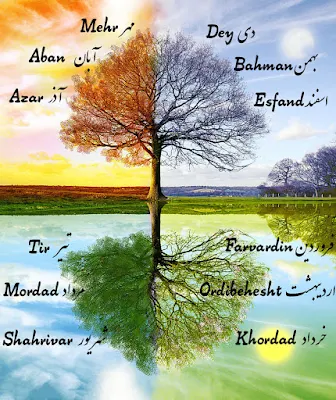
The Iranian year begins on the day of the vernal equinox - the first day of spring. It consists of 365 days and 12 months of varying lengths which have retained their old Persian names. They are: Farvardin, Ordibehesht, Khordad; Tir, Mordad, Shahrivar; Mehr, Aban, Azar; Dey, Bahman, and Esfand. The first six months are each 31 days, the next five 30 days, and the last 29 except in leap years, when it is 30 days. The solar calendar or Persian calendar is used in everyday function.The lunar calendar or Islamic calendar is not used in the same sense as the solar calendar but essentially Iranian need it to mark religious holidays and the Gregorian calendar is used for world history. You can check the chart below to find out the equivalent of Persian dates in Georgian calendar.
                                                                                                          
Persian month
Start date
duration
Farvardin
21st of March
31
Ordibehsht
21st April
31
Khordad
22 May
31
Tir
22nd Jun
31
Mordad
23rd July
31
Shahrivar
23rd August
31
Mehr
23rd September
30
Aban
23rd October
30
Azar
22nd November
30
Dey
2nd  December
30
Bahman
21st Jan
30
Esfand
20th February
29


The Iranian year begins on the day of the vernal equinox - the first day of spring. It consists of 365 days and 12 months of varying lengths which have retained their old Persian names. They are: Farvardin, Ordibehesht, Khordad; Tir, Mordad, Shahrivar; Mehr, Aban, Azar; Dey, Bahman, and Esfand.
Persian Calendar